Romans 4 is of great importance in understanding how man gets right with God, but it has also been subject to erroneous interpretations that distort the good news of justification by faith. We will therefore look closely at Romans 4 and in so doing refute Roman Catholic and Arminian errors regarding justification and the imputation of Christ’s righteousness.
After stating that “a man is justified by faith apart from works of the Law” (Rom. 3:28), the Apostle Paul raises the example of Abraham. Paul had said that God justifies both the “circumcised” and “uncircumcised” through faith (3:30). And since Abraham was known for receiving the covenant sign of circumcision in Genesis 17, it makes sense that Paul would now bring up Abraham the Jewish “forefather” (4:1).
Abraham’s Example of Justification by Faith (Romans 4:3)
As to what was “found” by Abraham (Rom. 4:1), Paul comes back to this in verses 9-12, as he shows that Abraham received the sign of circumcision as a seal of justification by faith (4:11). But our concern here is 4:2-5. Paul makes it clear that Abraham was not “justified by works” (4:2), but by faith (4:3). As Paul says:
For what does the Scripture say? “Abraham believed God, and it was credited to him as righteousness.” (Rom. 4:3, NASB 1995)
Paul is quoting Genesis 15:6. In that original context, God said to Abraham in a vision, “Do not fear, Abram, I am a shield to you; Your reward shall be very great.” (Gen. 15:1). Abraham said to God that he was childless and had no seed (15:2-3). So the Lord said, “This man [Abraham’s servant Eliezer] will not be your heir; but one who will come forth from your own body, he shall be your heir” (Gen. 15:4). It then says, “And He took him outside and said, ‘Now look toward the heavens, and count the stars, if you are able to count them.’ And He said to him, ‘So shall your seed be.’” Then Genesis 15:6 says:
Then he believed in the LORD; and He reckoned it to him as righteousness. (Gen. 15:6)
So Abraham believed God’s promise of a child in his old age, and that his descendants would be many. And it was upon that faith that God “reckoned” him as righteous.
The Hebrew of Genesis 15:6 says that God “reckoned it [faith] to him [unto] righteousness.” The “it” is feminine, as is the word “righteousness.” So it’s also possible to translate this as God “reckoned it—righteousness—to him.” But the Greek Septuagint, which Paul quotes in Romans 4:3, uses a passive verb, so that it says, “and it was reckoned to him unto righteousness” (καὶ ἐλογίσθη αὐτῷ εἰς δικαιοσύνην).
The verb “credited” in Romans 4:3, logizimai (λογίζομαι), is used 11 times in Romans 4. Outside of Scripture, the Greek word referred to “reckoning” or “charging up a debt.” The New Testament’s usage is defined as “to determine by mathematical process, reckon, calculate” (BDAG, 597).
The term logizimai can be either positive or negative. In Romans 4:3, it is positive—Abraham’s faith was credited unto righteousness. In Romans 4:8, it is negative—sin is not credited to the believer (“Blessed is the man whose sin the Lord will not take into account [λογίσηται]”). So we see that sin is not credited to believers, but their faith is credited unto righteousness.
Theologically, we are dealing with the concept of imputation. Which is to ascribe something to someone by virtue of himself or of a quality in another. Adam’s guilt was imputed to us, as we are counted guilty as his descendants. Our sin was imputed to Christ, who bore its guilt and penalty on the cross. Christ’s righteousness is imputed to us, as God counts us as righteous in Him. All of these concepts have all been challenged by various groups in church history, and we will consider some challenges related to the imputation of Christ’s righteousness.
Rome’s Error Concerning Romans 4:4
Romans 4:4 says, “Now to the one who works, his wage is not credited as a favor, but as what is due” (τῷ δὲ ἐργαζομένῳ ὁ μισθὸς οὐ λογίζεται κατὰ χάριν ἀλλὰ κατὰ ὀφείλημα).
It’s clear from this verse that a man’s wage is “not credited as grace.” But this could be read as also saying that a man’s wage is “not credited as grace, but [credited] what is due.” But can what is owed to someone be “imputed” to him? This is debated. But it is required for the Roman Catholic view of imputation, which holds that imputation refers to that which is according to reality and according to merit. This is what some Roman Catholic theologians argued, such as Guilielmus Estius (1542–1613) and Gabriel Vasquez (c. 1549–1604).[1]
This raises a problem, since Roman Catholicism defines imputation to mean that God forgives our sin and counts us as righteous because we are inherently righteous. The Council of Trent (1545–1563), the Roman Catholic council that responded to the Reformation, held that inherent righteousness is required for justification. Trent condemned the Protestant position when it stated:
If any one saith, that men are justified, either by the sole imputation of the justice of Christ, or by the sole remission of sins, to the exclusion of the grace and the charity which is poured fourth in their hearts by the Holy Ghost, and is inherent in them; or even that the grace, whereby we are justified, is only the favour of God; let them be anathema. (Canons of the Council of Trent, Session VI, Canon XI, trans. Waterworth, 46)
According to Trent, the formal cause of justification is God’s righteousness, with which we are not only reputed (Latin reputamur) as righteous but are actually righteous. Thus, an alien righteousness is not imputable—that is, Rome denies that the alien righteousness of Christ can be counted as the believer’s. According to Trent, prior to righteousness being imputed to the sinner, he must first have his own inherent righteousness.
Catholic theologian Robert Bellarmine (1542–1621) appealed to Romans 4:5 as speaking of imputation as something truly present. So Rome holds that God must first impart (communicare) righteousness to the sinner before He can judge (reputare) him as inherently righteous. This communication of righteousness comes through transfusion (infusio) of the habitus of faith, as faith is considered perfect because it operates through love.[2]
The Roman Catholic Church still holds this view, as seen in its modern Catechism of the Catholic Church: “Justification…conforms us to the righteousness of God, who makes us inwardly just by the power of his mercy” (CCC 1992). The language of “inwardly just” refers to inherent righteousness. However, this is completely contrary to Romans 4:5, which speaks of God justifying “the ungodly”—“But to the one who does not work, but believes in Him who justifies the ungodly, his faith is credited as righteousness” (Rom. 4:5). We are not justified with a prior inherent righteousness, but we are justified at the moment we are ungodly!
Unfortunately, Rome conflates justification and sanctification. Both are the fruit of Christ’s saving work in us, but they are distinct. God declares the ungodly to be righteous (justification), but He also makes sure the ungodly who are justified become godlier over the course of their lives (sanctification).
Rome also said “the instrumental cause” of justification “is the sacrament of baptism, which is the sacrament of faith” (Canons of the Council of Trent, trans. Waterworth, 34–35). The Catholic Catechism says, “Justification is conferred in baptism, the sacrament of faith” (CCC 1992). This is erroneous, since the instrumental cause of justification is faith. Christ is the grounds of justification, and faith connects us to Him. Baptism seals justification by faith (Rom. 4:11), but it is not instrumental in justification.
Interpreting Romans 4:4—Can Debt Be Imputed?
Returning to Romans 4:4, we see that Roman Catholic theologians read this as saying that a man’s wage is “not credited [imputed] as grace, but [imputed] what is due.” This is a possible translation of the Greek (τῷ δὲ ἐργαζομένῳ ὁ μισθὸς οὐ λογίζεται κατὰ χάριν ἀλλὰ κατὰ ὀφείλημα), which may be literally translated as follows:
To the one who works, the wage is not reckoned according to favor but according to debt. (Rom. 4:4)
However, the language of “imputed” may not be necessary to the last clause, thus yielding an alternative translation. It is possible that the last clause of Romans 4:4 is an incomplete statement and requires an ellipsis. The concept in verse 4 is that “to the one who works, his wage is…what is due.” In this case, the verb is left out, but it is not supposed to be “credited.” The emphasis is on the word “not”—there is no imputation to the one who works. He simply receives “what is due.” Thus, the contrast is between “the wage according to debt” and what is “reckoned according to favor.”
This is how Theodore Beza (1519–1605) understood the verse in in his 1588 Latin translation of Romans 4:4, which is rendered in English as follows: “But to him who works, the wages are counted not as a gift, but it is owed to him.”[3] Johannes Piscator (1546–1625) understood Romans 4:4 similarly in his 1589 commentary on Romans.[4] As did the 1637 Dutch States’ Bible (Statenvertaling), which distinguished between “giving according to debt” and “imputing according to grace.” These marginal notes were written by Antonius Walaeus, who studied under Beza at Geneva.[5] In this case, the English translation would read as follows (substituting “is” for “as” in the NASB):
Now to the one who works, his wage is not credited as a favor, but is what is due. (Rom. 4:4)
This translation of Beza and Piscator is tied with their view that imputation cannot be that which is owed. And if correct, this rules out the Roman Catholic view of imputation that God infuses righteousness into the believer and on this basis counts him as righteous (inherent righteousness). This is not possible if imputation cannot refer to that which is owed.
While possible, a problem with this translation by Beza and Piscator is that Romans 4:8 does in fact imply that God may impute according to what is owed. Quoting from Psalm 32:2, Romans 4:8 literally reads, “Blessed is the man whose sin the Lord will not reckon [λογίσηται].” God does not reckon the believer’s sin to him, which implies that God can indeed reckon a man’s sin to him. Based on the use of logizomai in Romans 4, it does not seem that we can limit the meaning of imputation to that which is according to grace. Rather, God may impute/reckon a man’s sin to him, or God may impute/reckon righteousness to a sinner on account of faith.
The view of Piscator (and Beza) was rejected by Reformed theologians such as André Rivet (1572–1651), Franciscus Gomarus (1563–1641), Anthony Tuckney (1599–1670), and John Davenant (1572–1641).[6] This represented a shift in the Reformed view of imputation from the sixteenth to the seventeenth century, which responded to the Socinian, Arminian, and Roman Catholic challenges of the Reformed view as represented by Piscator.[7] The Reformed of the seventeenth century “began arguing that both imputation according to debt and imputation according to grace constituted imputation in the proper sense.”[8] As Westminster divine Anthony Burgess (1600–1664) defined it, “to impute, is to account or reckon to a man such a thing, or cause of it, which he hath not, or hath, whether it be good or evil.”[9]
Yet this reading of Romans 4:4, which defines imputation to include something present in man (intrinsic) or not present in man (extrinsic), does not require the Roman Catholic view of imputation based upon infused righteousness. In fact, the Roman Catholic view runs contrary to the entire passage of Romans 4. Sinful man deserves to be reckoned as a sinner (Rom. 4:8), but God counts the sinner as righteous through faith (Rom. 4:3). Abraham did not work for his justification (Rom. 4:2, 4), which the Roman Catholic may grant by saying that infused righteousness is not from works but by God’s grace in Christ. But the Roman Catholic view cannot overcome the plain language of Romans 4:5—“But to the one who does not work, but believes in Him who justifies the ungodly, his faith is credited as righteousness.” God does not justify the man who is righteous (infused or otherwise), but the man who is ungodly! God is the God “who justifies the ungodly” (τὸν δικαιοῦντα τὸν ἀσεβῆ), not the godly. God declares the “ungodly” man to be righteous, which means justification is not on the basis of inherent righteousness.
Therefore, justification involves God reckoning an unrighteous man as righteous. On what basis can He do this? None other than the righteousness of Christ. It is not just the consequences or effects of Christ’s death that are imputed (as held by the Socinians, Arminians, and Roman Catholics, and even the Neonomians), but the righteousness of Christ Himself is imputed to the believer.[10] While the Arminians did differ with the Socinians on justification, both groups rejected Christ’s vicarious sacrifice, the transfer of the believer’s guilt to Christ on the cross, and the imputation of Christ’s righteousness to the believer.[11]
Imputation: Reality or Legal Fiction?
There is another notable difference on justification between the seventeenth-century Reformed and their predecessors in the sixteenth century, which is that imputation is according to reality. Roman Catholic theologians in the sixteenth century continually accused the Protestant doctrine of justification for being a mere legal fiction that results in an unjust judgment by God.[12] Additionally, the Socinians argued that if God could forgive sin with judgment not being according to reality, then Christ’s righteousness was not required for such judgment.[13]
In response to such attacks, Reformed theologians like John Owen (1616–1683) departed from Piscator’s view of imputation that rejected any place for impartation. Rather, Owen held that God truly imparts the righteousness of Christ to believers, so that they are reckoned as righteous according to reality. This is imputation through impartation. Roman Catholicism also holds that imputation is through impartation, but Rome only allows for the impartation of intrinsic qualities (hence their view of the infusion of righteousness). Contrary to Rome, Owen held that God imputes the extrinsic righteousness of Christ to believers, and the extrinsic sin of believers is imputed to Christ (namely sin’s guilt). Owen held that imputation involves not a transfusion or transfer, but a translation and transcription. Impartation precedes imputation, so that Christ’s righteousness properly belongs to believers and thus God’s judgment is in accordance with reality (and also the believer’s sin properly belongs to Christ so that He bore our guilt and its penalty). It is not just the consequences of Christ’s redemption (contra Anthony Wotton and the Neonomians), but Christ’s obedience itself, that is imputed to believers. The effects of Christ’s righteousness (forgiveness, adoption, etc.) are given to believers, not imputed. Thus, in imputation, God imparts our sins to Christ, judges Him as guilty, and treats us as righteous. This view was also held by other Reformed theologians such as Anthony Burgess, John Davenant, and Anthony Tuckney.[14]
As this relates to the imputation of sin to Christ, there was debate over the details. Owen held that it is not sin in all its aspects that was imputed to Christ, but the guilt of our sin. Guilt is the obligation to punishment for sin.[15] This was also the position of Reformed theologians such as John Flavel, Daniel Williams, and Petrus Van Mastricht.[16] The Antinomians rejected a distinction between sin and guilt and so held that sin itself was transferred to Christ, so that He “became a sinner.”[17] They appealed to 2 Corinthians 5:21 (“He made Him sin who knew no sin”), whereas the orthodox understood this to mean that Christ became sin metaphorically and took on its punishment—thus becoming “the guilty one” or the “sin offering.”[18] The Neonomians, such as Richard Baxter, held that only the consequences (effects) of sin were imputed to Christ, and only the consequences of Christ’s righteousness are imputed to believers. Yet rather than hold that our guilt was imputed to Christ, the Neonomians said only the penalty was imputed to Him.[19] (Daniel Williams departed from the Neonomians on this point, holding that guilt was imputed.)[20] In mediating the dispute over Antinomianism, Herman Witsius accepted the language that sins themselves were imputed to Christ, but he qualified that this concerned sins “as regards guilt” (quoad reatum) and not the defilement (macula) of sin.[21] This issue has also proved to be complex among American Presbyterians.[22]
Thus, there was debate as to whether the following was imputed to Christ: (1) all aspects of sin were imputed to Christ (Antinomianism); (2) only the consequences of sin (i.e., the penalty) were imputed to Christ (Neonomianism); or (3) sin was imputed to Christ, but only in reference to sin’s guilt and thus its penalty (most of the Reformed). This mattered because it determined the language that Christians use for Christ’s substitutionary work, as the Antinomians said that in imputation, “Christ had become a sinner” (and not just taken on sin’s guilt or penalty). The Reformed and the Neonomians rejected this language, with the exception that some Reformed affirmed it in a qualified sense (that it referred to imputation and not inherent sin).[23]
While there were differences among the Reformers and their successors, the Reformed orthodox, regarding some of the details of imputation, they agreed that, contra Rome, God regards believers as righteous because of Christ’s righteousness. In other words, we are not counted as righteous before God because we are righteous in and of ourselves (inherent righteousness). Rather, we are counted as righteous by God because He does not count our sin as our own and grants us the title of acquittal through Christ who bore our guilt. This is the best possible news you could receive! Though we sin, God forgives us. He imputed our sin to Christ on the cross. And He imputes Christ’s righteousness to us when we believe. That’s justification. And it is glorious. It is all grace. It’s not “what is due,” but “credited as a favor.”
The Arminian Error Concerning Romans 4:5
The point of God’s grace is driven home in Romans 4:5—“But to the one who does not work, but believes in Him who justifies the ungodly, his faith is credited as righteousness” (τῷ δὲ μὴ ἐργαζομένῳ πιστεύοντι δὲ ἐπὶ τὸν δικαιοῦντα τὸν ἀσεβῆ λογίζεται ἡ πίστις αὐτοῦ εἰς δικαιοσύνην).
We do not work for our justification, but simply believe and are thus counted as righteous. But what exactly do we mean here that “faith is credited as righteousness”? An erroneous interpretation was held by Jacob Arminus (d. 1609), the namesake of the Arminians that opposed Calvinism. Arminius did not think that Christ’s righteousness is imputed to us, but instead that the believer’s deed of faith is imputed as righteousness. Arminius still held that Christ’s obedience is the meriting cause of justification (causa meritoria), but he denied it is the material cause (causa materialis)—instead making our imperfect righteousness the material cause.[24] (The Lutheran theologian Philip Melanchthon said something similar.)[25]
The debate between the Reformed and the Arminians on justification concerned intrinsic righteousness (Arminianism) vs. extrinsic righteousness (Reformed). The Reformed held that it is Christ’s righteousness that is counted as ours in justification (extrinsic). While the Arminians held that only the effects of Christ’s satisfaction are imputed—so that our faith and obedience are accepted for our justification (intrinsic).[26] (The view of the Neonomians had some similarities here.)
Now, this Arminian reading could be concluded from our English translations of Romans 4:5. The NASB says “his faith is credited as righteousness.” But the literal Greek of verse 5 is “unto [εἰς] righteousness” (also verse 3). The believer’s “faith is credited unto righteousness.” This preposition is important. Scripture does not say that faith itself is imputed as righteousness, but that faith is imputed unto righteousness. Some English translations say “for righteousness” (KJV, NKJV, ASV), which is better than “as righteousness” (NASB, ESV, NET). Thus, these passages should be translated as follows:
Abraham believed God, and it was reckoned to him unto righteousness. (Rom. 4:3)
But to the one who does not work, but believes in Him who justifies the ungodly, his faith is reckoned unto righteousness. (Rom. 4:5)
It is not our faith that is the material cause of justification, but Christ’s righteousness. Our faith is not a substitute for righteous deeds. Rather, our faith connects us to the perfect law-keeping Christ, who bore our sins as our substitute on the cross and whose righteousness is imputed to us. And God has deemed it to be that faith is credited unto righteousness. He who believes in the Son of God is declared righteous before the Father.
To put it all together, we propose the following translation of Romans 4:3-5:
For what does the Scripture say? “Abraham believed God, and it was reckoned to him unto righteousness.” To the one who works, his wage is not reckoned as favor, but as debt. But to the one who does not work, but believes in Him who justifies the ungodly, his faith is reckoned unto righteousness. (Rom. 4:3-5)
Reformed, Biblical Justification
Dealing with these errors of Rome and Arminianism should help enlighten Westminster Confession of Faith chapter 11 on justification. This chapter rejects both errors as follows:
Those whom God effectually calleth, he also freely justifieth: not by infusing righteousness into them [Romanism], but by pardoning their sins, and by accounting and accepting their persons as righteous; not for anything wrought in them [Romanism], or done by them, but for Christ’s sake alone; nor by imputing faith itself, the act of believing, or any other evangelical obedience to them, as their righteousness [Arminianism]; but by imputing the obedience and satisfaction of Christ unto them, they receiving and resting on him and his righteousness, by faith; which faith they have not of themselves, it is the gift of God. (WCF 11.1)
Romanism says that righteousness is infused into Christians in faith for justification. Arminianism says that our faith is imputed as righteousness in justification. But both of these assertions are contrary to Scripture. Biblical justification is when God forgives us of our sins and counts us as righteous, not because of anything in us (contra Rome), and not because our faith itself is imputed as righteousness (contra Arminianism), but because through the instrument of faith God imputes Christ’s righteousness to us.
Faith does not merit righteousness for us, but it obtains God’s favor. Thus, it is by faith that we are declared righteous. Calvin said, “faith adorns us with the righteousness of another, which it seeks as a gift from God” (Commentary on Romans 4:5). God loves faith, and He has chosen to deem faith as the means to salvation. So we must believe in God. Again, Calvin said, “We hence conclude that the question is not, what men are in themselves, but how God regards them; not that purity of conscience and integrity of life are to be separated from the gratuitous favor of God; but that when the reason is asked, why God loves us and owns us as just, it is necessary that Christ should come forth as one who clothes us with his own righteousness.” (Commentary on Romans 4:3)
Therefore, justification may be summarized with Westminster Shorter Catechism question and answer 33:
What is justification? Justification is an act of God’s free grace, wherein he pardoneth all our sins, and accepteth us as righteous in his sight, only for the righteousness of Christ imputed to us, and received by faith alone. (WSC 33)
The Blessing of Justification by Faith
Justification by faith is a great blessing—in fact, the greatest blessing possible—as we are declared right before God. While Paul looked to Abraham as an example of justification by faith (Rom. 4:1-3), he also looked to David as a teacher of the doctrine (Rom. 4:6-8). This is why after proclaiming that God justifies the ungodly through faith (Rom. 4:5), Paul quotes Psalm 32:1-2, saying that David spoke “of the blessing on the man to whom God credits righteousness apart from works: ‘Blessed are those whose lawless deeds have been forgiven, and whose sins have been covered. Blessed is the man whose sin the Lord will not take into account.’” (Rom. 4:6-8)
These verses from Psalm 32:1-2 do not explain specifically how God forgives sin, though we know from elsewhere in Scripture that it is through substitutionary atonement. Psalm 32:5 only shows that God honors the confession of sin (“I acknowledged my sin to You, and my iniquity I did not hide; I said, ‘I will confess my transgressions to the LORD’; and You forgave the guilt of my sin.”) Psalm 32:1-2 focuses merely on the blessing of God’s forgiveness. But this does have the language of imputation when it says, “Blessed is the man whose sin the Lord will not take into account (logizimai)” (Rom. 4:8/Ps. 32:2). God does not impute (logizimai) our sin (Rom. 4:8), but He does impute (logizimai) righteousness to us through faith (Rom. 4:5).
Even though we actually committed sin, the Lord treats us as if we did not because of Christ’s redeeming work. In not taking our sin into account, God “forgives” us and “covers” our sins. Blessed is the man who is justified. And therefore blessed is the man who believes in Jesus Christ as His Lord and Savior.
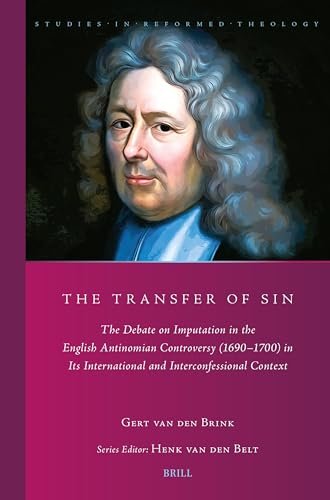
[1] Gert van den Brink, The Transfer of Sin: The Debate on Imputation in the English Antinomian Controversy (1690–1700) in Its International and Interconfessional Context, Studies in Reformed Theology 48 (Leiden: Brill, 2025), 126–27. This is an excellent book that covers imputation and other subjects related to antinomian disputes. This article relies heavily on the research brought forth in this book.
[2] van den Brink, The Transfer of Sin, 118–19, 160, 163, 174.
[3] van den Brink, The Transfer of Sin, 127–28.
[4] van den Brink, The Transfer of Sin, 131.
[5] van den Brink, The Transfer of Sin, 132.
[6] van den Brink, The Transfer of Sin, 153–56.
[7] van den Brink, The Transfer of Sin, 156–57, 159.
[8] van den Brink, The Transfer of Sin, 158.
[9] Anthony Burgess, The True Doctrine of Justification in Two Parts, 3rd ed. (London, 1655), 2:287.
[10] van den Brink, The Transfer of Sin, 139–40, 152. Fausto Socinus (1539–1604) argued that imputed righteousness only refers to the forgiveness of sins, resulting from the consequences of Christ’s death, and that this was granted to those who lived a righteous life. Ibid., 135–36. Of course, Romans 4:5 says that God “justifies the godly,” not those who live righteously.
[11] van den Brink, The Transfer of Sin, 152; Gisbertus Voetius, Selectae Disputationes, 3:234.
[12] van den Brink, The Transfer of Sin, 163.
[13] van den Brink, The Transfer of Sin, 175.
[14] van den Brink, The Transfer of Sin, 168–72, 180. See John Owen, The Works of John Owen, ed. William H. Goold (London, 1850–1862), vol. 5. Dabney critiqued Owen’s language on imputation, instead arguing that “in the imputation of Christ’s righteousness, it is not the attribute of righteousness in Christ which is imputed, but that which is the exact counterpart of guilt—the title to acquittal.” R. L. Dabney, Syllabus and Notes of the Course of Systematic and Polemic Theology Taught in Union Theological Seminary, Virginia, 2nd ed. (St. Louis: Presbyterian Publishing Company of St. Louis, 1878), 641.
[15] van den Brink, The Transfer of Sin, 182, 187, 205. For Richard Baxter’s disagreement with Owen, see Hans Boersma, A Hot Pepper Corn: Richard Baxter’s Doctrine of Justification in Its Seventeenth-Century Context of Controversy (Regent College Publishing, 2004), 236ff.
[16] van den Brink, The Transfer of Sin, 185, 189.
[17] van den Brink, The Transfer of Sin, 189.
[18] van den Brink, The Transfer of Sin, 191, 208.
[19] van den Brink, The Transfer of Sin, 200.
[20] van den Brink, The Transfer of Sin, 197, 202.
[21] van den Brink, The Transfer of Sin, 232, 234, 242.
[22] As for what specifically was imputed from Adam to his posterity, R. L. Dabney explained that “it is not Adam’s sin which is imputed to us, but the guilt (obligation to punishment) of his first sin. This much misunderstood doctrine does not teach that Adam’s act was actually made ours.” Dabney, Systematic and Polemic Theology, 329. Likewise, Charles Hodge said, “To impute sin, in Scriptural and theological language, is to impute the guilt of sin. And by guilt is meant not criminality or moral ill-desert, or demerit, much less moral pollution, but the judicial obligation to satisfy justice.” Hodge, Systematic Theology, 2:194. A. A. Hodge also limited imputation to Adam’s guilt, which he defined as liability to punishment. A. A. Hodge, Outlines of Theology (1878), 357–58. Some have argued that Charles Hodge denied the imputation of guilt and only affirmed the imputation of the penalty (which would be the Neonomian view). See John Murray, The Imputation of Adam’s Sin (Grand Rapids: Eerdmans, 1959), 74–85; J. V. Fesko, Death in Adam, Life in Christ: The Doctrine of Imputation (Ross-shire, UK: Mentor, 2016), 126–75; C. N. Willborn, “Charles Hodge, the Sin Problem, and History,” in Charles Hodge: American Reformed Orthodox Theologian, ed. Ryan McGraw (Göttingen: Vandenhoeck & Ruprecht, 2023), 206–207, 220, 225. However, Dabney and the Hodges followed many seventeenth-century Reformed theologians in holding that the imputation of sin only refers to guilt, as it was the Antinomians who refused to distinguish sin and guilt in imputation. Van den Brink, The Transfer of Sin, 182, 187, 193, 205, 213. For example, in writing against the Antinomians, John Flavel said that “even Adam’s person sins, considered in his single private capacity, are not communicable to his posterity.” After defining “the guilt of sin” as “an obnoxiousness unto punishment,” Flavel concluded, “we say the guilt and punishment of our sin, was that only which was imputed unto Christ, but the very transgression of the law itself, or sin formally and essentially considered, could never be communicated or transfused from us unto him.” John Flavel, The Works of John Flavel (Edinburgh: Banner of Truth, 2023), 3:580. Confusion may result from the terminology, as some distinguished between the “liability of guilt” (reatus culpae), the inward unworthiness of sin, and “the liability of punishment” (reatus poenae), the obligation to punishment. The authors of the Synopsis Purioris Theologiae (Polyander, Rivet, Walaeus, Thysius) said that only the latter “is removed completely through the forgiveness of sins and the imputation of Christ’s righteousness.” Synopsis Purioris Theologiae / Synopsis of a Purer Theology: Latin Text and English Translation, Volume 1, Disputations 1–23, ed. Dolf te Velde, trans. Riemer A. Faber (Leiden: Brill, 2014), 393 (16.21). Dabney and Charles Hodge seemed to have agreed with the Synopsis, but they described the latter reatus poenae with the English word “guilt.”
[23] van den Brink, The Transfer of Sin, 206–207.
[24] van den Brink, The Transfer of Sin, 145.
[25] van den Brink, The Transfer of Sin, 153. Melanchthon wrote that Paul in Romans 4:5 “clearly states that faith itself is counted as righteousness. Therefore, faith is the deed which God declares to be righteousness.” Ibid., citing Philippus Melanchthon, Commentarii in epistolam Pauli ad Romanos (Wittenberg, 1532), 27:434.
[26] van den Brink, The Transfer of Sin, 144–45, 149–50, 152.