I have written articles on covenant theology, including the question of whether the Mosaic covenant is a republication of the covenant works. But here I want to interact with OPC minister Patrick Ramsey’s excellent 2025 article in the Mid-America Journal of Theology, titled “Same But Different: The Meaning and (Mis)Use of a Reformed Formula.” Ramsey focuses on the Reformed formula that the old and new covenants are the “same in substance but different in administration.”[1] (There is also a shorter online article by Ramsey.)
Ramsey argues “that the Reformed formula of ‘same in substance and different in administration’ has a standard meaning and use within the Reformed tradition, particularly in and around the time of the Westminster Assembly” (82). With many citations of seventeenth-century Reformed theologians, Ramsey demonstrates that a covenant’s “substance” refers to its “formal and material reality held in common” (63). Appealing to Robert Rollock, Ramsey defines a covenant as “a promise under a condition” (63).[2] Ramsey then reasons as follows: “If covenants have the same promises and conditions, then they are the same in substance” (63). In other words, a covenant’s substance consists primarily of a promise and condition, and it therefore follows that two covenants containing the same promise and condition are the same in substance.
This has application to the Mosaic covenant and its relationship to the new covenant. For some Reformed theologians today affirm that the Mosaic covenant was a “republication of the covenant of works,” but then they also want to affirm that the Mosaic covenant was part of the covenant of grace. The way proponents resolve this apparent contradiction is by misusing the Reformed formula, claiming that the Mosaic covenant was the covenant of grace in substance but a covenant of works in administration. Yet Ramsey argues that this is incorrect:
Substance and administration cannot be at odds with one another. The substance of grace cannot be administered by works. Therefore, it is improper, if not nonsensical, to describe the Mosaic covenant as a works covenant in administration and as a grace covenant in substance. (73)
The Westminster Confession on the Substance of the Mosaic Covenant
What becomes particularly problematic in Presbyterian denominations is that republication proponents claim to follow the Westminster Confession on the Mosaic covenant. The Westminster Confession’s position is that the Mosaic covenant was part of the covenant of grace. As Ramsey says of the Westminster position: “Since the two covenants [old and new] are the same kind of covenant, they share the same promises and conditions” (71). The same promise of Christ and His benefits and the same condition of faith can be seen from the following citations:
This covenant [of grace] was differently administered in the time of the law, and in the time of the gospel: under the law, it was administered by promises, prophecies, sacrifices, circumcision, the paschal lamb, and other types and ordinances delivered to the people of the Jews, all foresignifying Christ to come; which were, for that time, sufficient and efficacious, through the operation of the Spirit, to instruct and build up the elect in faith in the promised Messiah, by whom they had full remission of sins, and eternal salvation; and is called the old testament. (WCF 7.5)
There are not therefore two covenants of grace, differing in substance, but one and the same, under various dispensations. (WCF 7.6)
The liberty which Christ hath purchased for believers under the gospel consists in their freedom from the guilt of sin, the condemning wrath of God, the curse of the moral law; and, in their being delivered from this present evil world, bondage to Satan, and dominion of sin; from the evil of afflictions, the sting of death, the victory of the grave, and everlasting damnation; as also, in their free access to God, and their yielding obedience unto him, not out of slavish fear, but a childlike love and willing mind. All which were common also to believers under the law. (WCF 20.1)
Sacraments are holy signs and seals of the covenant of grace, immediately instituted by God, to represent Christ, and his benefits; and to confirm our interest in him: as also, to put a visible difference between those that belong unto the church, and the rest of the world; and solemnly to engage them to the service of God in Christ, according to his Word. (WCF 27.1) … The sacraments of the old testament, in regard of the spiritual things thereby signified and exhibited, were, for substance, the same with those of the new. (WCF 27.5)
Most notably, the Confession states that “under the law” the condition for receiving the “promises” was “faith in the promised Messiah” (WCF 7.5). That is the same condition as the new covenant.
Other Reformed Views of the Mosaic Covenant
Ramsey surveys some of the minority Reformed views of the Mosaic covenant, which held that the Mosaic Covenant differed in substance from the new covenant. These views were even represented by some Westminster Assembly members:
Samuel Bolton held John Cameron’s view that the Mosaic covenant was a “Distinct Subservient Covenant” that was neither a covenant of works nor a covenant of grace;
George Walker held that the Mosaic covenant was a “mixed covenant” that was partly a covenant of works and partly a covenant of grace; and
Stephen Marshall held that there were two distinct covenants at Mount Sinai, a view also held by William Perkins (68–69).
These men all held views of the Mosaic covenant that differed from the position set forth in the Westminster Confession. Yet the key for our purposes is that all of these men used language that rejected that the Mosaic and new covenants were “the same in substance.” They understood that to hold that there was a covenant of works in the Mosaic covenant entailed that the Mosaic covenant was not substantially a covenant of grace.
Ramsey says, “By the very definition of the terms, a covenant of grace cannot be administered by a covenant of works or by an opposite principle” (71). He adds, “to introduce a different condition in the administration is to alter the substance of the covenant because the condition is part of the substance. Consequently, whatever condition is administered is the kind of covenant it is” (72). One may object that the “works covenant/principle only applies to life in the land and not to eternal life,” but this still introduces “a different condition” and thus the Mosaic covenant would be a “third kind of covenant akin to the Subservient covenant position” (72).
Modern Deviations from the Westminster Confession
The problem that Ramsey is addressing is that some Reformed theologians today hold these minority views but still claim that they affirm that the Mosaic and new covenants are the same in substance. Men like Michael Horton and Harrison Perkins adopt the phrase, “same in substance but different in administration,” but they do not mean what older Reformed theologians meant by this. Ramsey quotes Horton as saying that the Mosaic covenant is “an entirely different covenant with an entirely different basis” than the new covenant. But then Horton also affirms that the Mosaic covenant “was an administration of the covenant of grace.”[3] But how can this be? If the “basis” of the Mosaic covenant differs from the new covenant, then it cannot be part of the covenant of grace.
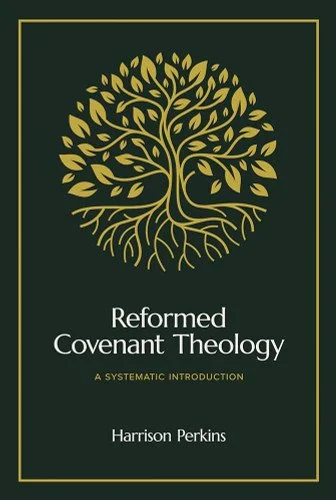
Ramsey also quotes Harrison Perkins, who in his book Reformed Covenant Theology affirms that “the Mosaic covenant is identical in substance with the other administrations of the covenant of grace.”[4] Yet Perkins also says that the Mosaic covenant “differed from the covenant God had made with their ancestors” in that “a real works principle operated for the nation holistically.” Perkins says that “the nation was under a covenant of works.”[5]
Again, if the Mosaic covenant involved a covenant of works (or “works principle”), then it differed in substance with the new covenant. The positions of Horton and Perkins are akin to one of the minority Reformed views that the Mosaic covenant differed in substance from the new—either the Subservient Covenant view (neither a covenant of works nor grace), the Mixed Covenant view (partly a covenant of works and partly a covenant of grace), or the Two Covenant view (both a covenant of grace and a covenant of works were given at Sinai).[6]
The point is not to say that Horton and Perkins have no claim to the term “Reformed” for their view of the Mosaic covenant. Rather, it is to say they are confusing the matter by claiming that they hold the majority position of the Westminster Assembly. Horton and Perkins do not, in reality, affirm that the Mosaic and new covenants were “the same in substance.” By affirming that the promises and conditions differ between the covenants, they hold a view that the substance of the covenants also differs.
Ramsey deals with various objections (73–81), including Perkins’s understanding that the Mosaic covenant is a covenant of grace simply “because Christ and his saving benefits are distributed to believers in every age, whether Old or New Testament.”[7] Ramsey shows that this is insufficient for affirming that the Mosaic covenant is in substance a covenant of grace, since those who rejected this point still affirmed that Christ and His benefits were applied to Old Testament believers (76). Ramsey also shows that affirming the Mosaic covenant’s design for serving the covenant of grace is insufficient to make it substantially a covenant of grace (76).
Administrative Republication?
Some have termed the position of Horton and Perkins as an “administrative republication” of the covenant of works in the Mosaic covenant. Perkins himself distinguishes between the substance and administration of the Mosaic covenant when he says that the “works principle” of the Mosaic covenant did not pertain to the covenant’s “substance” but to its “administrative level.”[8]
Perkins says that “some [Reformed theologians] provide historical precedent” for this administrative republication, and, “Even confessional statements include some degree of this teaching, albeit these are open to more than one understanding.” However, Perkins says, “The confession does not require this reading but permits it.”[9] Perkins says “there is no singular confessional view of each individual administration” of the covenant of grace. He footnotes this, saying that “Letham is, therefore, incorrect to argue that WCF 7.5 specifically interpreted the Mosaic covenant; Systematic Theology, 457.”[10]
On this point, I think Perkins is wrong that there is no confessional view of the Mosaic covenant, and Letham’s case is strengthened by Ramsey’s article. As noted above, the Westminster Confession states that “under the law” the condition for receiving the “promises” was “faith in the promised Messiah.” This does not exclude the Land Promise, which falls under the “promises” but also the “types” of Christ given to the Jews—since the land typifies Christ’s dominion over the nations (WCF 7.5). There is no room for a separate condition of “works,” or a second distinct Mosaic covenant regarding the land. In such a case, the Mosaic covenant would “differ in substance” (contra WCF 7.6).
The OPC’s Committee Report on Republication concluded that the Confession “allows for an administrative republication of the covenant of works,” like the view held by Perkins. Yet Ramsey argues that a covenant’s “administration” cannot be in contradiction to its “substance.” And he demonstrates that this is in agreement with the standard meaning of the formula “same in substance but different in administration” around the time of the Westminster Assembly (62).
Ramsey also shows that the very language of “administrative republication” is flawed. Under this label, the OPC Report on Republication listed “accidental republication” (that the Jews perverted the law into a covenant of works), but Ramsey says the misuse of the covenant of grace should not be categorized as “republication” (78). Also under the label of “administrative republication,” the OPC Report listed “declarative republication” (that the covenant of works is only repeated at Sinai), but Ramsey says this is essentially the “two distinct covenants view,” which is actually substantial republication (77).
The OPC Report on Republication under “administrative republication” also listed “material republication,” which affirms the republication of the matter (the moral law) but not the form of the covenant of works (the promises and conditions of the covenant of works). This is taught in Westminster Confession 19.1–2, which says that the moral law given to Adam was restated in the Mosaic covenant. However, Ramsey says this position should not be considered “republication” because it rejects the republication of the form of the covenant of works. Ramsey also notes that the OPC Report uses the confusing language of there being a “works principle” in the Mosaic covenant, but since this refers to the form of the covenant of works (promises and conditions), it is substantial republication and not just material republication (77). Yet, “One must also affirm the sameness of the condition, which means that there cannot be a works principle operative in the covenant made with Israel” (78).
A “Works Principle” in the Covenant of Grace?
Ramsey here makes an important point regarding the condition of the Mosaic covenant, and those affirming the Westminster Confession’s view of the Mosaic covenant should stop referring to a “works principle” being present in it. Such a principle would make the Mosaic covenant something other than the covenant of grace in substance. For if the Mosaic covenant involved a “works principle” as a condition, then it did not share the new covenant’s condition of faith. If this “works principle” only referred to the Land Promise, then this still introduces a covenant of works into the substance of the Mosaic covenant—leading to the position either of a subservient covenant or two distinct covenants at Sinai.
The presence of “works” in the old covenant does not require a “works principle.” Further, neither republication nor a “works principle” were required in the Mosaic covenant in order for us to affirm the imputation of Christ’s active obedience (as is sometimes claimed).[11] There are also works in the new covenant. But the promise of the Mosaic covenant is the same in substance with the new covenant (salvation), and that was received on the same condition as the new covenant (faith). Both the Mosaic covenant and the new covenant contain law and works, but those things do not change the promise and condition. They do not change the substance of the covenant. The same arguments often put forth that the Mosaic covenant had a “works principle” would lead to also affirming that the new covenant has a “works principle.”
In the covenant of grace, the condition of salvation (faith) produces imperfect obedience to God’s law (good works), which brings temporal blessings. There were earthly, temporal blessings for Old Testament believers, but there are also temporal blessings for Christians, which are tied with obedience. Furthermore, the national curse of Old Testament Israel being exiled from the Promised Land was not just for any disobedience, but particularly for apostasy. And since the Promised Land typifies the new heavens and earth, apostasy also means Christians will forfeit their inheritance in the land (Heb. 4, 6). The Old Testament does not divide the Mosaic covenant into individual grace and national works. But this is to argue the merits of the position. The primary point of this article is that such a republication position, by claiming there was a covenant of works or “works principle” in the Mosaic covenant’s administration, rejects the Westminster Confession’s view that the Mosaic covenant is a covenant of grace in substance.
[1] D. Patrick Ramsey, “Same But Different: The Meaning and (Mis)Use of a Reformed Formula,” Mid-America Journal of Theology 36 (2025): 59–82.
[2] Robert Rollock, A Treatise of God’s Effectual Calling (1603), 6: “The covenant of God generally is a promise, under some one certain condition” (spelling modernized). Though this leaves out the aspect of an oath/oath-sign, this is still a good definition of a covenant.
[3] Michael Horton, God of Promise: Introducing Covenant Theology (Baker Books, 2006), 53, 50.
[4] Harrison Perkins, Reformed Covenant Theology: A Systematic Introduction (Lexham Academic, 2024), 319, cf. 334. As is common with those associated with Westminster West and its Reformed Two Kingdoms (R2K) theology, Perkins also divides the Noahic covenant into two—“one before the flood concerning his family’s rescue (Gen 6:9–8:22), and one after about preserving the world from another universal catastrophe (Gen 9:1-19).” Instead of being one covenant, he says that “the better interpretation recognizes that God’s rescue of Noah and his family in the Ark fulfilled his covenant promises in Genesis 6:13-21.” The supposed second Noahic covenant of Genesis 9 “does not properly administer the covenant of grace but facilitates its purpose by upholding the world as the stage for God’s unfolding plan.” Perkins, Reformed Covenant Theology, 306. However, Perkins does not defend this division much, but relies on the work of others. For a critique of this “two Noahic covenants” view, see Zachary Garris, “A Critique of Modern ‘Reformed Two Kingdoms,’” in Stephen Wolfe, Zachary Garris, and Sean McGowan, Reformed Christian Politics (Berith Press, 2026), 187–225.
[5] Perkins, Reformed Covenant Theology, 320, 332.
[6] The following statement by Perkins sounds like the “two Mosaic covenants” view: “the administration with legal conditions for the nation, although genuinely differing in principle concerning the nation’s blessings, could not alter the covenant of grace’s true substance of salvation by grace alone in Christ for individuals.” Perkins, Reformed Covenant Theology, 341. Interestingly, Perkins does not cite Meredith Kline much for his position, possibly to prevent negative associations. Instead, Perkins quotes many earlier Reformed theologians in support of his view, saying “some provide historical precedent for” his view. Ibid., 332. However, it is not clear any one theologian held Perkins’s Klinean view, as he seems to be pulling different points from different theologians of old. He appeals to William Perkins’s comment that “The two testaments are the covenant of works and the covenant of grace.” He then says that William Perkins “links the covenant of works and the covenant at Sinai so much that he essentially equates them.” Ibid., 334. Thus, William Perkins held to an actual form of republication (i.e., the Mosaic covenant is in substance a covenant of works). However, this is not the position Harrison Perkins had been defending. He also appeals to John Colquhoun and his view that the Mosaic covenant was “a mixed dispensation.” As Colquhoun said, “the national covenant between God and the Israelites” was “an appendage to the covenant of grace.” Ibid., 337. This may in fact be similar to Perkins’s view, as Colquhoun held there were two different Mosaic covenants.
[7] Perkins, Reformed Covenant Theology, 188.
[8] Perkins, Reformed Covenant Theology, 322.
[9] Perkins, Reformed Covenant Theology, 332, 334.
[10] Perkins, Reformed Covenant Theology, 302.
[11] Here are some additional thoughts on republication: (1) The Bible teaches the moral law was present in both the covenant of works and the Mosaic covenant, and that there is a parallel between Adam and Christ in that Christ kept the moral law for us and Adam did not (Rom. 5). (2) But republication advocates want to go further and say the covenant of works was republished “in some sense” in the Mosaic covenant. Some want to call the restatement of moral law “republication,” while others say the covenant of works was republished at the national level in the Mosaic covenant. One of the main goals of republication proponents is to strengthen support for the imputation of Christ’s active obedience. But what they end up doing is distorting the Mosaic covenant and undermining the third use of the law by downplaying the continuity of the role of the law in the old and new covenants—thus introducing a form of antinomianism. (3) We can still affirm the imputation of Christ’s active obedience by affirming that Jesus kept the moral law, and His law-keeping status is imputed to us through faith. He was not strictly under the covenant of works, but by keeping the moral law Christ did that which Adam failed to do (which thus broadly fulfills the covenant of works).


We baptize our babies and train them unto the knowledge of the Lord that He promised in this new covenant.